


Ultralight Camping Sleep Systems for Australian Adventurers: What's New in 2026
A good night's sleep in the bush isn't a luxury — it's the foundation of a safe, enjoyable trip. Push through too many cold, uncomfortable nights on cheap gear and the cumulative exhaustion affects your judgement, your mood, and your ability to handle unexpected situations on the trail. The sleep system — your sleeping bag, sleeping mat, and shelter — is arguably the most important gear investment you'll make as a camper or hiker.
The good news is that sleep system technology has advanced dramatically in recent years, and 2026 has brought some genuinely exciting options to the Australian market. From innovative insulation materials that match down warmth at a fraction of the weight, to sleeping mats that finally balance R-value, packability, and comfort, the options available today are a significant leap forward from even five years ago. This guide covers what's new, what's worth the investment, and how to build a sleep system suited to Australian conditions.
Sleeping Bags in 2026: New Materials and Technologies Worth Knowing
Down has long been the benchmark for sleeping bag insulation — nothing else matches its warmth-to-weight ratio or compressibility. Responsibly sourced 800 to 900-fill-power goose down remains the gold standard for serious weight-conscious hikers and campers. At this fill power, you're looking at insulation that compresses to roughly the size of a large water bottle while delivering comfort temperatures down to -5°C or lower, depending on shell design and baffle construction.
The ongoing challenge with down is wet weather performance. Wet down loses most of its loft and insulating ability very quickly — a serious problem in the wet tropics of northern Australia or alpine areas where unexpected rain and condensation are common. Hydrophobic down treatments — most notably DWR-treated down used in bags from Sea to Summit, Feathered Friends, and Western Mountaineering — have significantly improved wet performance, allowing down to retain roughly 60 to 70 per cent of its loft when damp. This doesn't make down waterproof, but it buys you valuable time in deteriorating conditions.
Synthetic Insulation: The 2026 Options Closing the Gap on Down
For wet-weather camping, coastal paddling trips, or any scenario where your kit regularly gets damp, synthetic insulation has become genuinely competitive in 2026. Technologies like Outdoor Vitals' Zero Stitch fabric system — which weaves inner and outer shell together to eliminate baffle stitching holes, reducing heat loss and improving weather resistance — represent a meaningful step forward in synthetic sleeping bag design.
Polarguard and PrimaLoft remain the most widely used synthetic fills, with PrimaLoft Gold Active offering a useful combination of stretch, warmth, and moisture resistance that makes it well suited to athletic sleeping styles. For three-season Australian camping in areas prone to morning dew or light rain, a quality synthetic bag in the 300 to 500g fill weight range offers a compelling balance of performance and peace of mind.
The weight penalty of synthetic versus down has narrowed considerably. A well-designed synthetic bag rated to 0°C now typically comes in at around 900g to 1.1kg — still heavier than an equivalent down bag at 650 to 750g, but the gap is no longer as dramatic as it once was. For base camp camping and 4x4 touring where weight isn't a primary concern, synthetic insulation's durability and wet-weather reliability make it an attractive choice.
Quilt vs Sleeping Bag: The Ultralight Debate
Sleeping quilts — essentially topless sleeping bags with a footbox — have moved firmly into the mainstream ultralight camping scene and are now stocked by most major Australian outdoor retailers. The logic is compelling: the down or synthetic insulation beneath you gets compressed by your body weight and provides effectively zero insulation, so you're carrying dead weight that contributes nothing to warmth. A quilt eliminates that underside material, saving 150 to 300g on a comparable-warmth bag and often packing smaller too.
The trade-off is that quilts require an adjustment in sleeping style — they work best when you sleep on your back or side without rolling excessively, and you need a slightly warmer sleeping mat to compensate for the reduced shell coverage. In Australian conditions, where sub-zero nights are uncommon except in alpine areas, quilts are an excellent choice for three-season hiking from March through to November. The Enlightened Equipment Revelation and the Sea to Summit Spark quilts are particularly well regarded in the Australian hiking community for build quality and warmth consistency.
For campers who run cold, toss and turn frequently, or regularly camp in alpine conditions, a traditional mummy bag with a full zip and hood offers better warmth security and the psychological comfort of full enclosure. The Sea to Summit Spark SP series released for 2026 is worth particular attention — their updated baffling system and improved zips address most of the previous generation's criticisms.
Sleeping Mats: The Most Underrated Part of Your Sleep System
Ask any experienced camper what single upgrade transformed their camp sleep quality, and the sleeping mat will be in the top two answers, right alongside a better sleeping bag. The mat does two things: it cushions you from the ground and — critically — it insulates you from the cold ground, which conducts heat away from your body far more effectively than cold air. Getting the R-value right for your expected conditions is just as important as getting the right sleeping bag temperature rating.
R-value is a measure of thermal resistance — the higher the number, the better the insulation. For three-season camping in most Australian conditions, an R-value of 3 to 4 is generally sufficient. For winter alpine camping, you need at least R5, and in genuinely cold conditions like the Snowy Mountains in midwinter, stacking two mats to combine their R-values is common practice among experienced mountaineers.
Inflatable Mats: The Best Balance of Comfort and Weight in 2026
The inflatable sleeping mat market has seen significant innovation in 2026, with the Sea to Summit Ultralight XR Insulated Air Mat and NEMO's Eclipse All-Season leading the pack. The Sea to Summit Ultralight XR comes in at under 500g for a regular size while delivering an R4.2 rating — genuinely impressive numbers that would have seemed impossible five years ago. The NEMO Eclipse offers a 6.2 R-value in a 4-inch thick mat that tips the scales at just 540g for a regular — outstanding for alpine camping.
What differentiates the best 2026 inflatable mats isn't just weight and R-value — it's the quality of valve systems, the noise the mat makes when you move (a perennial frustration with thin inflatable designs), and the durability of the outer fabric under realistic bush camping conditions. Look for mats with 30 to 40 denier fabrics on the underside for reasonable puncture resistance when camping on rough terrain. Carrying a repair kit remains essential regardless of mat quality.
For 4x4 camping and car-based trips where weight is less critical, a 10cm self-inflating mat in the 1.2 to 1.6kg range provides near-home comfort and is virtually impervious to puncture from normal camp debris. Brands like Exped, Thermarest, and Sea to Summit offer quality options in this category that will last a decade or more with reasonable care.
Foam Mats: Simple, Indestructible and Undervalued
Closed-cell foam mats have been dismissed by the ultralight community for years, but they're staging a quiet comeback in 2026 — partly because they're indestructible, and partly because their R-value doesn't diminish over time the way inflatable mat insulation can. The Thermarest Z-Lite Sol remains the benchmark in this category: an accordion-fold mat that weighs just 410g, delivers R2, and can be strapped to the outside of a pack without concern. It doubles as a sit pad, a camp chair insulator, or an emergency splint.
Many serious hikers now combine a closed-cell foam mat (for the majority of insulation) with a thin inflatable mat on top (for comfort), creating a hybrid system with combined R-values in the 4 to 5 range at a total weight well under 800g. It's an approach that's particularly well suited to Australian conditions where morning ground frost is the main challenge rather than extreme sustained cold.
Shelter Systems: Lightweight Options for Australian Conditions
A complete camping sleep system includes a shelter, and the options available in 2026 reflect both the increasing capability of lightweight materials and a better understanding of the specific weather challenges Australian conditions present. The key consideration here is balancing weight and packability with the ability to handle the rapid weather changes common in Australian mountain environments, where a clear evening can turn into a howling westerly by midnight.
Single-wall tents using new silnylon or DCF (Dyneema Composite Fabric) outer shells can now deliver genuine three-season capability at weights under 800g for a solo setup. The trade-off is interior condensation management — single-wall designs struggle in humid conditions. For the dry, clear nights common in the Australian bush from autumn through spring, single-wall designs perform beautifully. For tropical camping in the wet season, a double-wall design with good inner mesh ventilation remains the smarter choice.
Bivy Bags and Tarps for Minimalist Camping
Bivy bags — waterproof-breathable cocoons that enclose your sleeping bag — have evolved significantly in 2026. The latest designs from OR (Outdoor Research) and SOL use eVent and other high-breathability fabrics that dramatically reduce condensation compared to older Gore-Tex bivies, making them practical for multi-night use without a tent. A quality bivy adds only 200 to 400g, gives your sleeping bag an effective 3 to 5°C temperature boost, and provides meaningful protection against unexpected rain.
Tarp camping — using a simple silnylon or DCF tarp pitched with trekking poles or natural anchors — is the most minimalist shelter approach and works very well in the dry Australian outback where the main shelter need is shade from the sun and rain rather than wind protection. A 1.2 x 2.4m silnylon tarp weighs around 300g and can be pitched in a variety of configurations to suit different conditions. Combined with a bivy bag for dew and occasional rain, it's a remarkably capable and lightweight system for experienced bushwalkers.
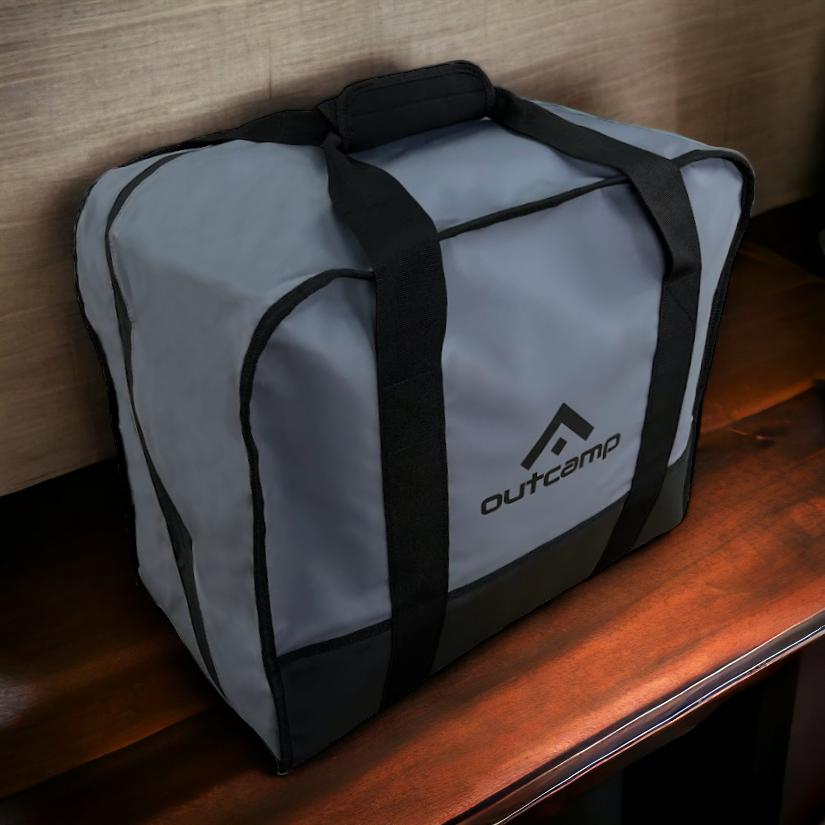
Whatever system you settle on, invest in the best quality your budget allows for the components you use most often — your sleeping mat and bag will directly determine your comfort and recovery every single night in the field. Good gear, properly maintained and correctly matched to your expected conditions, pays dividends on every trip. Explore Outcamp's range of outdoor accessories and carry solutions to keep your sleep system protected and organised on your next Australian adventure.




Leave a comment (all fields required)