


Best Portable Power Stations for Camping in Australia: A 2026 Buyer’s Guide
There was a time when camping meant disconnecting from everything electronic. These days, keeping a fridge cold, charging devices, and even running a Starlink Mini from a remote campsite is just part of the experience. The portable power station has quietly become one of the most important pieces of gear in any Australian camper’s setup, sitting right alongside the swag and the esky in terms of sheer usefulness.
With dozens of brands now competing for shelf space and the technology shifting rapidly toward LiFePO4 chemistry, choosing the right unit can feel overwhelming. This guide breaks down exactly what you need to know before spending your money, whether you’re powering a weekend campsite, running electronics from a 4x4, or keeping a caravan comfortable during extended off-grid stays.
Why LiFePO4 Chemistry Matters for Australian Camping
If you take one thing away from this guide, make it this: insist on LiFePO4 (lithium iron phosphate) chemistry. The older lithium-ion NMC cells that dominated the market a few years ago are being phased out of quality portable power stations for good reason, and the Australian climate is a big part of why.
Understanding the difference between battery chemistries is not just technical trivia. It directly affects how long your power station lasts, how safely it operates in the heat, and whether you will still be using it five years from now.
Thermal Stability in Australian Heat
Australian summers push gear to its limits. Temperatures inside a vehicle or enclosed trailer can easily exceed 50°C, and that is where NMC lithium-ion cells start to become a genuine safety concern. Thermal runaway, the chain reaction where a cell overheats and potentially catches fire, is a real risk with NMC chemistry at elevated temperatures.
LiFePO4 cells, by contrast, have a thermal runaway threshold well above 200°C. They simply do not carry the same risk profile in hot conditions. For anyone who has ever left gear baking in the back of a 4x4 on a January afternoon in outback Queensland, that difference matters enormously.
This thermal stability also means LiFePO4 units maintain their rated capacity more consistently in warm conditions. Where an NMC unit might throttle its output to protect itself in the heat, a LiFePO4 station will keep delivering the watts you paid for.
Cycle Life and Long-Term Value
A quality LiFePO4 portable power station will deliver between 2,000 and 4,000 charge cycles before dropping to 80 percent of its original capacity. Compare that to 500 to 800 cycles for a standard lithium-ion unit. If you are camping most weekends and charging your station once or twice a week, a LiFePO4 unit could realistically last a decade or more.
That longevity fundamentally changes the value equation. A LiFePO4 station might cost 20 to 30 percent more upfront, but when you spread that cost over thousands of extra cycles, the per-use cost drops dramatically. It is an investment in gear that will not need replacing halfway through your touring life.
The environmental angle is worth considering too. Fewer replacements mean less electronic waste ending up in landfill, something that matters more as the camping community grows and our collective impact on the places we love to visit increases.
Weight and Density Improvements in 2026
Early LiFePO4 power stations had a reputation for being heavier than their NMC counterparts at equivalent capacities. That gap has narrowed significantly. The latest generation of cells from manufacturers like BYD and CATL have improved energy density to the point where the weight penalty is minimal, often less than half a kilogram of difference at the 1,000Wh level.
Newer units are also more compact, with better internal packaging and smarter thermal management that eliminates the need for oversized heatsinks. What you end up with is a unit that is barely larger than what you might have bought two years ago but with substantially better performance and longevity.
For 4x4 and caravan setups where every kilogram counts toward your GVM, this improvement is significant. You can now get genuine LiFePO4 reliability without the weight penalty that used to make it a hard sell for weight-conscious tourers.
Choosing the Right Capacity for Your Camping Style
The single biggest mistake people make when buying a portable power station is getting the capacity wrong. Too small and you are constantly anxious about running out of juice. Too large and you have spent money on weight you do not need to carry.
Getting this right starts with understanding your actual power consumption, not what you think you might need in a hypothetical worst case, but what your gear actually draws across a typical camping day.
Weekend Camping: 500 to 700Wh
For a standard two to three night camping trip where you are running a 12V fridge, charging phones, powering a couple of LED lights, and maybe running a small fan overnight, a unit in the 500 to 700Wh range is the sweet spot. These stations are compact enough to toss behind a seat or slide into a storage drawer without reorganising your entire setup.
At this capacity, you can expect to get roughly 24 to 36 hours of fridge run time from a single charge, depending on ambient temperature and how often the compressor cycles. Add in phone charging, a few hours of LED lighting, and a Starlink Mini session, and you are looking at comfortable power for a full weekend without needing to top up.
The key brands hitting this range well include EcoFlow with the RIVER 2 Pro and Bluetti with the EB55. Both offer LiFePO4 chemistry, solid build quality, and enough output ports to handle a typical weekend campsite without breaking a sweat.
Extended Touring: 1,000 to 1,500Wh
If you are planning week-long trips, doing the big lap, or caravanning through remote areas where you cannot count on powered sites, step up to the 1,000 to 1,500Wh range. This is where portable power stations really prove their worth, providing enough capacity to run a fridge continuously, charge laptops for remote work, power a CPAP machine overnight, and still have reserves for unexpected needs.
Units like the Bluetti AC180 and EcoFlow Delta 2 sit in this range and have become the go-to choices for serious Australian tourers. They offer the right balance of capacity, weight, and output power. Most importantly, they charge efficiently from solar panels, which becomes critical when you are away from mains power for days at a time.
At this capacity level, pairing your power station with a 200W portable solar panel gives you genuine energy independence. On a clear Australian day, you can expect to recover 80 to 100 percent of your overnight consumption during daytime solar hours, effectively giving you unlimited power as long as the sun cooperates.
Base Camp and Caravan: 2,000Wh and Above
For caravan owners who spend extended periods off-grid, families running multiple devices, or anyone who needs to power 240V appliances like a microwave, kettle, or hair dryer, the 2,000Wh-plus category is where you need to look. These are serious units with serious output capability, often delivering 2,000W or more of continuous AC power.
The Bluetti AC200L has become a benchmark in this space, offering 2,048Wh of LiFePO4 capacity with 2,400W AC output. It can fast charge from a wall outlet, reaching 80 percent in about 45 minutes, which is useful for topping up between free camping stops. It also supports expansion batteries, meaning you can scale up to truly massive capacity if your setup demands it.
The trade-off at this size is weight. A 2,000Wh unit typically weighs between 25 and 30 kilograms, so these are not grab-and-go devices. They are best suited to a fixed position in a caravan, the tub of a ute, or a dedicated drawer system in a 4x4 setup where they can live permanently.
Essential Features to Look For
Beyond capacity and chemistry, several features separate a good portable power station from a great one. These are the specifications that actually matter in the field, rather than the marketing features that look good on a spec sheet but add little practical value.
Focusing on these core features will help you cut through the noise and choose a unit that performs reliably in Australian conditions, trip after trip.
Solar Charging with Built-In MPPT
A built-in MPPT (Maximum Power Point Tracking) solar charge controller is non-negotiable for any power station you plan to charge with solar panels. MPPT controllers optimise the conversion of solar energy by continuously adjusting the electrical operating point of the panels, extracting up to 30 percent more energy compared to basic PWM controllers.
Look for a unit with a solar input of at least 200W, and ideally 400W if you are buying a larger capacity station. Higher solar input means faster recharging, which translates directly to less time waiting around camp for your station to top up and more time actually enjoying your trip.
Check the input voltage range too. A wider range, particularly on the high end, gives you more flexibility in how you configure your solar panel array. Some units accept up to 150V open circuit voltage, allowing you to wire panels in series for better performance in partially shaded conditions.
Output Port Selection
Your power station is only as useful as its ability to connect to the gear you actually own. At a minimum, you want 12V DC outlets for running fridges and other 12V gear directly, 240V AC outlets for household appliances, USB-A ports for basic device charging, and USB-C ports with PD (Power Delivery) for laptops and fast-charging phones.
Pay particular attention to the 12V DC output. Many cheaper units only offer cigarette lighter style sockets, which are notoriously unreliable with vibration. Better units include Anderson plug outputs or barrel connectors that provide a more secure connection, especially important when your power station is mounted in a moving vehicle.
If you are running a Starlink Mini from your power station, make sure it has a USB-C port capable of delivering at least 65W PD. The Starlink Mini draws between 25 and 40W during normal operation but benefits from a higher-wattage port for reliable startup. Outcamp stocks a range of power cables and adapters specifically designed for connecting Starlink devices to portable power sources.
Australian Warranty and Support
A five-year warranty should be the minimum you accept on a LiFePO4 portable power station, and many reputable brands now offer seven or even ten years. More important than the warranty length is who stands behind it. Look for brands with an Australian presence, whether that is a local office, an Australian distributor, or at minimum a local warranty agent.
Sending a 25-kilogram power station back to China for warranty service is not a practical option. Brands like EcoFlow and Bluetti both have Australian operations and local stock, which means replacement parts and warranty claims can be handled without international shipping delays.
Check online forums and Australian camping communities for real-world reliability reports too. A two-year-old unit that is still performing well for someone touring the Kimberley tells you more than any spec sheet about how a product handles Australian conditions.
Putting It All Together: Your Portable Power Station Checklist
Choosing the right portable power station comes down to matching the unit to your specific camping style. Weekend warriors can keep things simple and light with a 500 to 700Wh LiFePO4 unit. Extended tourers and caravanners should step up to 1,000Wh or more and pair it with a quality solar panel for true off-grid independence.
Regardless of capacity, prioritise LiFePO4 chemistry, built-in MPPT solar charging, a solid selection of output ports, and genuine Australian warranty support. These four factors will serve you far better than chasing the biggest number on a spec sheet or the lowest price on a comparison website.
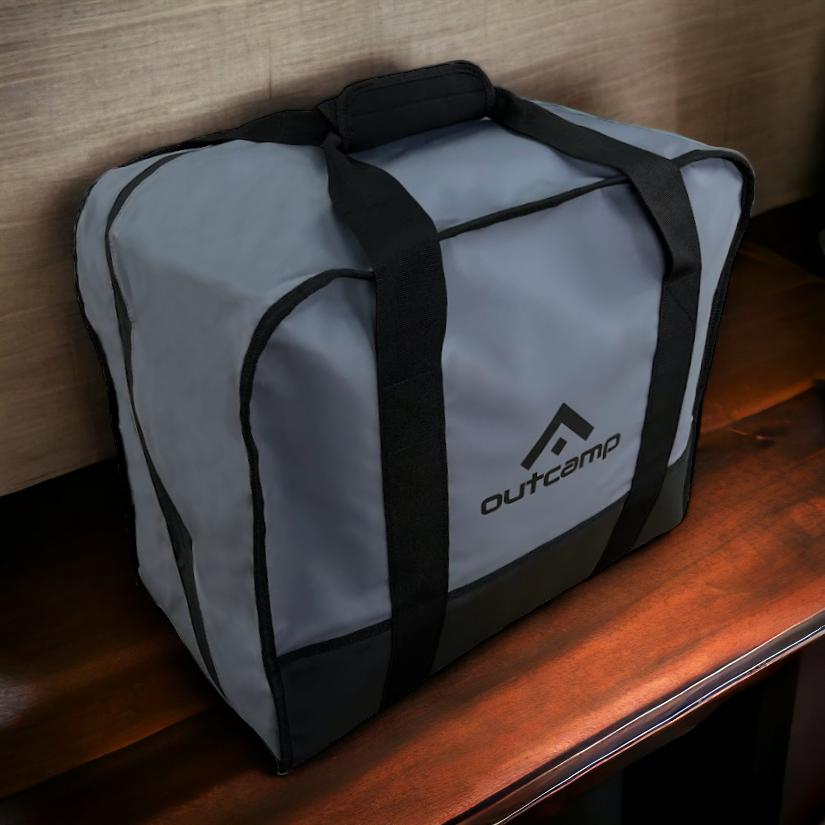
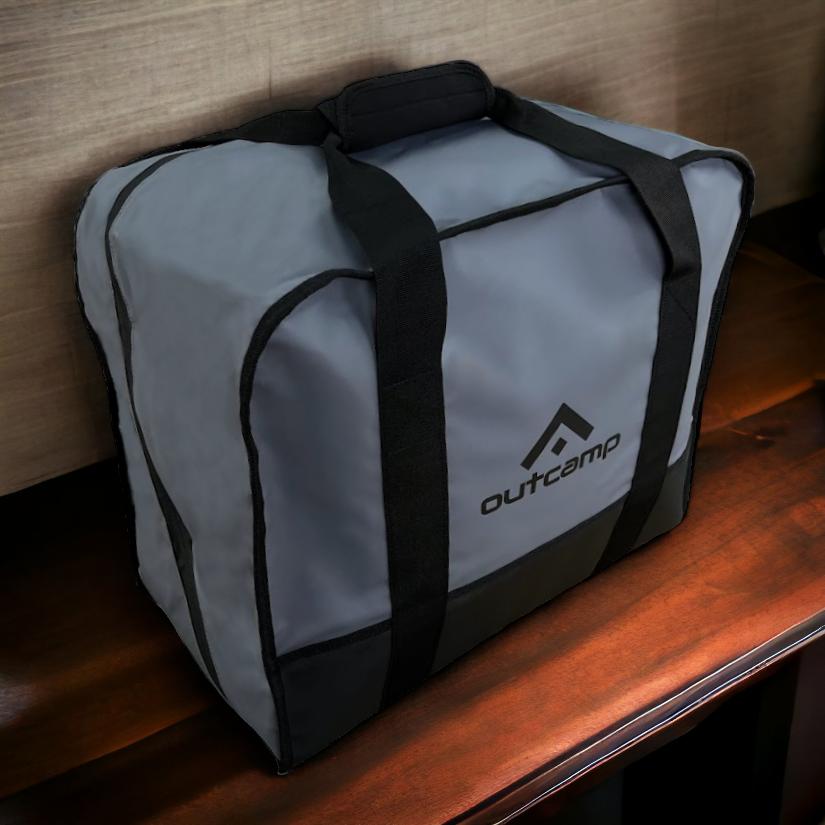
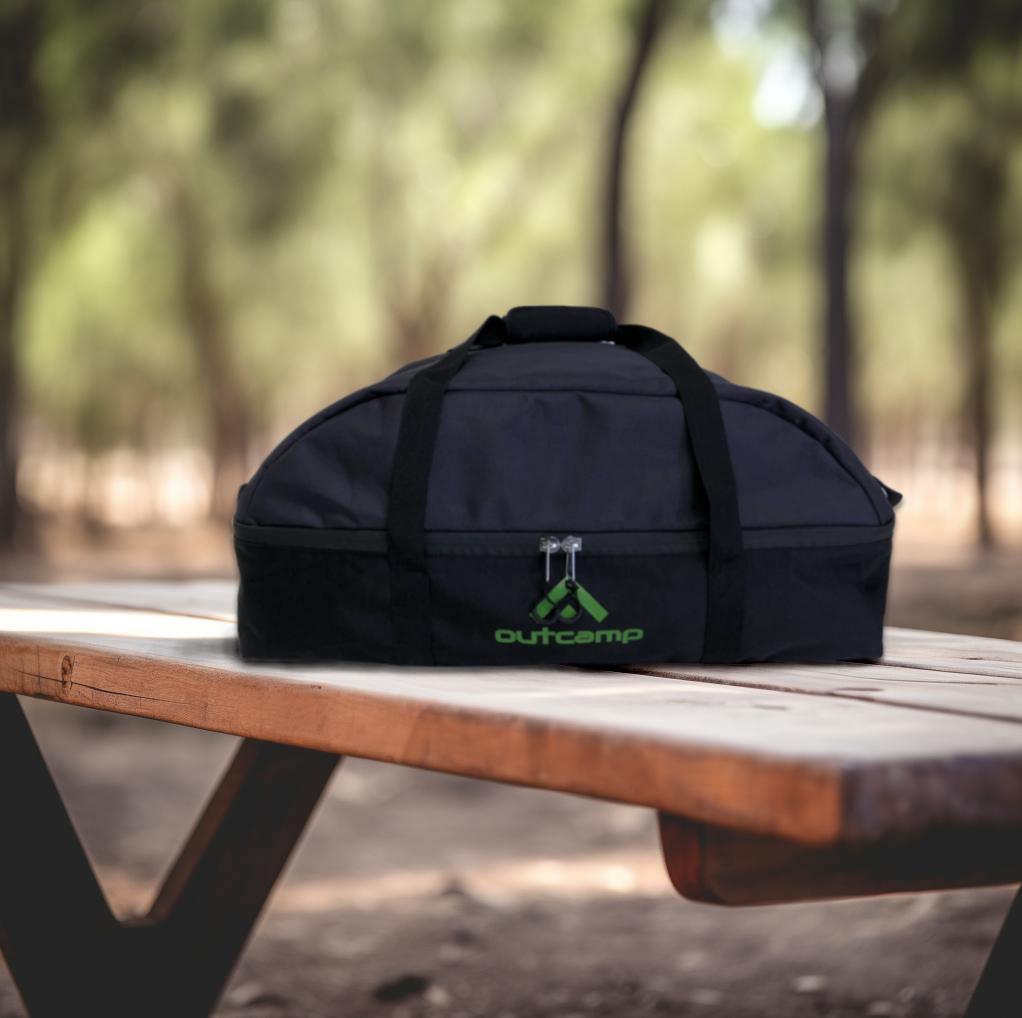
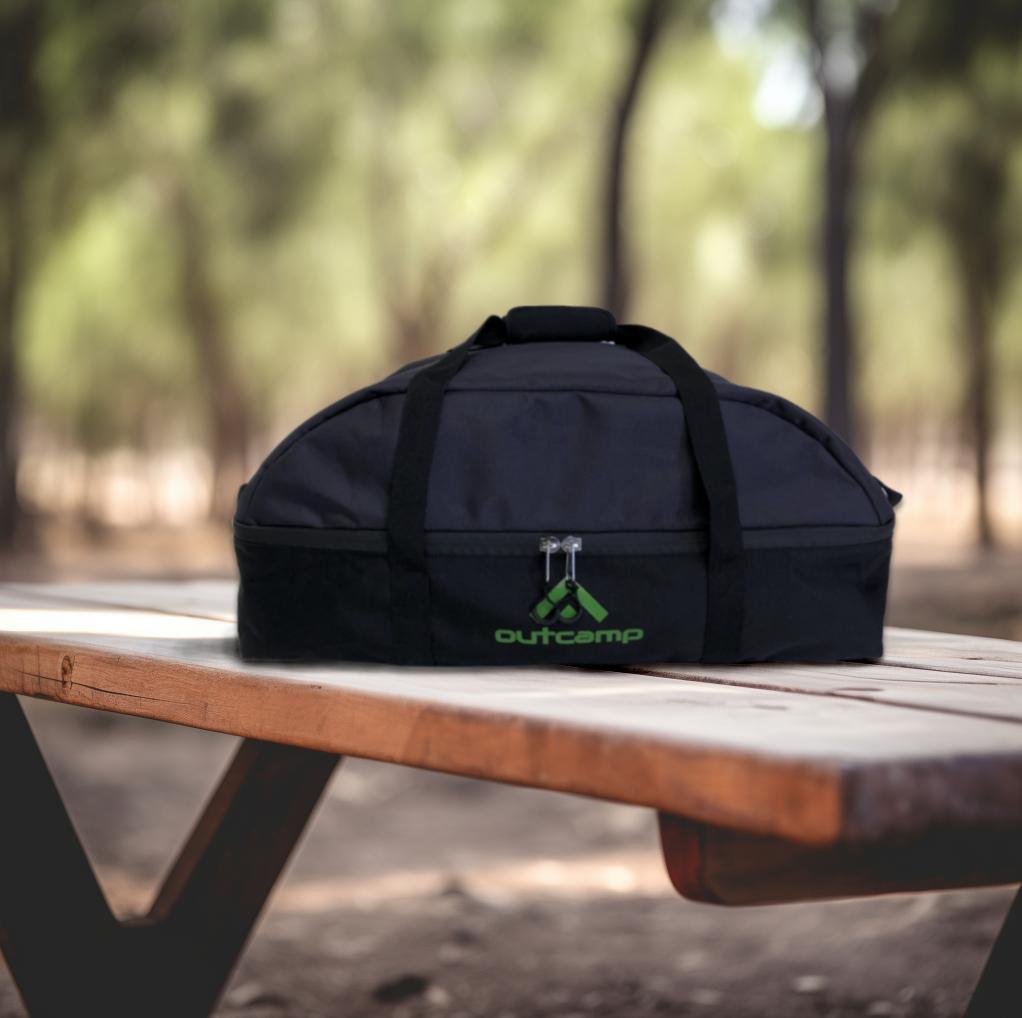
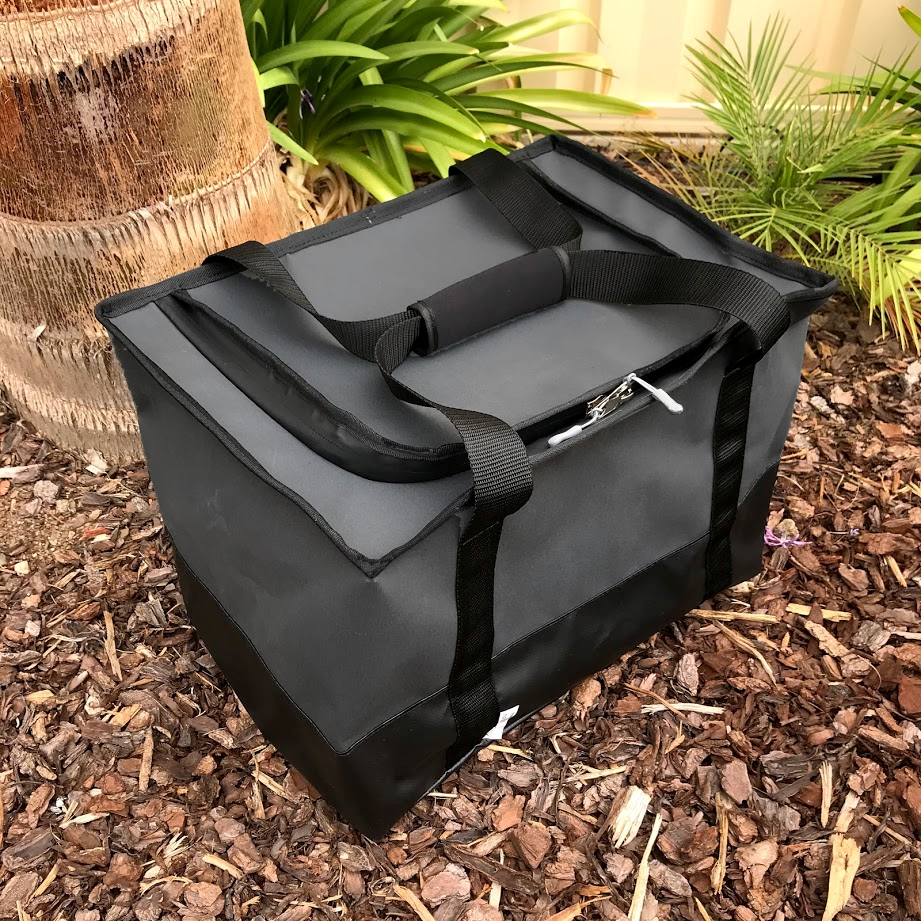
If you are building an off-grid power setup around a Starlink Mini or other connectivity gear, Outcamp carries purpose-built power cables, carry bags, and mounting solutions designed to integrate with portable power stations. Having the right accessories makes the difference between a tidy, reliable setup and a tangle of adapters that lets you down when you need it most. Browse the Outcamp range to find the gear that fits your touring setup.








Leave a comment (all fields required)