


UHF CB Radios for Off-Road Australia: A Complete Buying Guide for 2026
If you travel remote tracks in Australia — whether you're in a convoy with other 4x4s, towing a caravan through the outback, or fishing in a remote waterway without mobile coverage — a UHF CB radio isn't optional gear. It's how you communicate with the vehicles around you, how you warn oncoming traffic on narrow one-lane outback roads, and in many remote areas, it's how you call for help when satellite communicators aren't within reach. Understanding what to buy, how to install it, and how to use it effectively is more straightforward than many first-time buyers expect.
The Australian UHF CB market has matured significantly in recent years. Modern radios offer digital clarity, noise cancellation, and integration with caravan intercom systems at prices that have dropped considerably from even five years ago. This guide walks through the key specifications, the differences between fixed-mount and handheld units, installation considerations for 4x4 and caravan setups, and the operating practices that make radio communication genuinely useful in the field.
Understanding UHF CB Channels and Regulations in Australia
Australian UHF CB operates on the 477 MHz band, with 80 channels allocated for citizen band use. The ACMA (Australian Communications and Media Authority) regulates the band, and unlike many other countries, Australian UHF CB doesn't require a licence — any Australian resident can operate a compliant UHF CB radio legally. Understanding the channel allocations is essential before you head out, because using the wrong channel — particularly broadcasting on a repeater output channel — creates interference problems for other users and undermines the cooperative communication system that makes UHF CB work.
Key channels every Australian 4x4 driver and caravanner should know include: Channel 40 (the national call channel for road users), Channel 18 (the alternative call channel for non-road situations), Channels 1–8 and 41–48 (repeater output and input pairs that extend communication range in mountainous terrain), and Channel 5 and 35 (emergency channels that should be left clear unless you have an emergency). In convoy situations, most groups agree on a working channel away from the call channels to keep their communication separate from general traffic.
Repeaters: Extending Your Range in Remote Areas
The practical range of a standard UHF CB radio in flat, open terrain is around 5–10 km from a vehicle-mounted antenna, and considerably less in hilly or forested country where terrain blocks the line-of-sight signal. Repeaters extend this range dramatically by receiving transmissions on one channel and re-broadcasting them on another from an elevated location — hilltops, tower sites, and purpose-built repeater installations throughout regional and remote Australia.
Using repeaters correctly requires understanding the paired channel system. Each repeater uses a specific input/output channel pair: you transmit on the input channel and receive on the output channel. Most modern UHF CB radios handle this automatically when you select a repeater-enabled channel and activate the repeater function. The WICEN and ACMA maintain databases of registered repeaters throughout Australia, and many outback travellers carry a printed or downloaded list of repeater locations along their intended route.
Scan Functions and Monitoring Multiple Channels
Most quality UHF CB radios include a scan function that monitors multiple channels simultaneously, alerting you when traffic appears on any of the scanned channels. This is particularly useful in convoy situations where you want to maintain awareness on both your working channel and Channel 40, or when travelling through areas where local traffic may be using a different default channel to the national standard.
Dual watch — simultaneously monitoring Channel 40 and your working channel — is a feature worth having on any radio used for serious remote touring. It means you don't miss emergency calls or road warnings while your convoy is chatting on a working channel. Not all budget radios implement dual watch well; check reviews specifically for how reliably a radio's dual watch switches between channels, because a slow or unreliable scan implementation defeats the purpose.
Fixed-Mount vs Handheld UHF CB Radios
The choice between a fixed-mount in-vehicle radio and a handheld unit comes down primarily to transmit power and antenna capability. Australian UHF CB radios are limited to 5W output power maximum, and both fixed-mount and handheld units can transmit at this maximum. The real difference is in the antenna system: a fixed-mount radio connected to a properly installed external antenna will consistently outperform a handheld unit with a built-in or small external antenna in terms of range, signal clarity, and reliability.
For anyone spending serious time on remote tracks, a fixed-mount radio with a quality external antenna is the right choice. A handheld is a useful backup or supplement — for walking away from the vehicle, for use in a second vehicle without a fixed installation, or as a standalone solution for kayakers and hikers — but it shouldn't be your primary communication device if you have a 4x4 or caravan to mount a proper unit in.
Quality Fixed-Mount Radios for Australian 4x4 Use
The Australian market is dominated by a few well-regarded brands: GME, Uniden, and Oricom are the most commonly seen in serious touring setups, and all three produce reliable units in the $150–$500 price range depending on features. GME's TX3500S and TX4500S are consistently well-reviewed for build quality, clarity, and practical usability, and the GME brand has a long history in the Australian market with good local warranty support.
Key features to look for in a fixed-mount unit include: 80-channel coverage with the full Australian channel plan, CTCSS and DCS tone squelch for filtering interference, a backlit front panel readable in direct sunlight, weather-resistant construction (IP54 or better for units that may be exposed to dust and moisture), and a mounting bracket that keeps the radio accessible to the driver without obstructing sight lines. Remote head options — where the display and controls mount separately from the radio body — are a useful feature for utes and 4x4s where dashboard real estate is limited.
Handheld UHF CB Radios for Versatility
Handheld UHF CB radios have improved considerably in recent years. Battery life on quality units now extends to 12–16 hours of mixed transmit/receive use, waterproofing to IP67 is standard on mid-range and above units, and some models include GPS emergency beaconing functions as a supplement to their radio capability. GME's XRS-370C4 and Uniden's UH850S are strong performers in the Australian handheld market at competitive prices.
For kayak fishing, hiking, and off-bike communication on trail-riding trips, a handheld is the practical choice. A belt clip or chest harness mounting system keeps it accessible, and a quick scan of Channel 40 before launching onto a boat ramp or heading into remote bush gives you situational awareness of any relevant traffic in the area. Keep a spare battery or a 12V charging cable in your kit — a radio that dies mid-trip because you forgot to charge it is no radio at all.
UHF CB Antenna Selection and Installation
The antenna is where most budget radio installations fail. A $450 quality radio connected to a cheap or poorly installed antenna will perform worse than a $150 radio on a properly installed, quality antenna. Understanding the basics of antenna selection and installation pays dividends in communication range and reliability for the life of your setup.
Antenna gain is measured in dBi. A 0dBi (unity gain) antenna radiates equally in all directions including upward — which is wasted for vehicle-to-vehicle communication. A 3dBi antenna compresses the radiation pattern toward the horizontal plane, effectively doubling your usable transmit power in the direction you actually need. A 6.5dBi antenna compresses it further, approximately quadrupling it — but at the cost of near and overhead coverage, which can actually reduce performance in hilly terrain where you're transmitting toward vehicles above or below you on a slope.
Antenna Mounting Positions on 4x4s and Caravans
For 4x4 wagons and utes, a roof-mounted antenna at the rear corner or on the bull bar gives the best combination of height and sight line. Bullbar mounting keeps the antenna clear of the roofline in most situations and allows a full-length antenna without creating clearance issues for low-hanging branches on tight bush tracks. Most 4x4 accessory suppliers offer purpose-built antenna mounts for popular bull bars, and these provide a far more secure and RF-clean connection than generic adaptors.
For caravans, antenna placement on the A-frame forward of the van or on the front roof corner works well and keeps the antenna in a position where the tow vehicle doesn't significantly obstruct the signal path to other road users. An Anderson plug or dedicated coax connector at the caravan hitch allows quick connection and disconnection when hitching and unhitching, rather than running a permanent lead through a window or hatch.
Co-phased Dual Antenna Systems
Co-phased dual antenna systems — two antennas installed symmetrically on opposite sides of the vehicle with a phasing harness — provide omni-directional coverage without the dead zones that a single side-mounted antenna creates when transmission is directed toward the antenna's own vehicle body. They're more commonly seen on trucks and caravans than on 4x4s, but for any touring vehicle where communication in all directions is important, a co-phased system is worth considering. The installation is more involved than a single antenna, but the RF performance improvement is meaningful in real-world use.
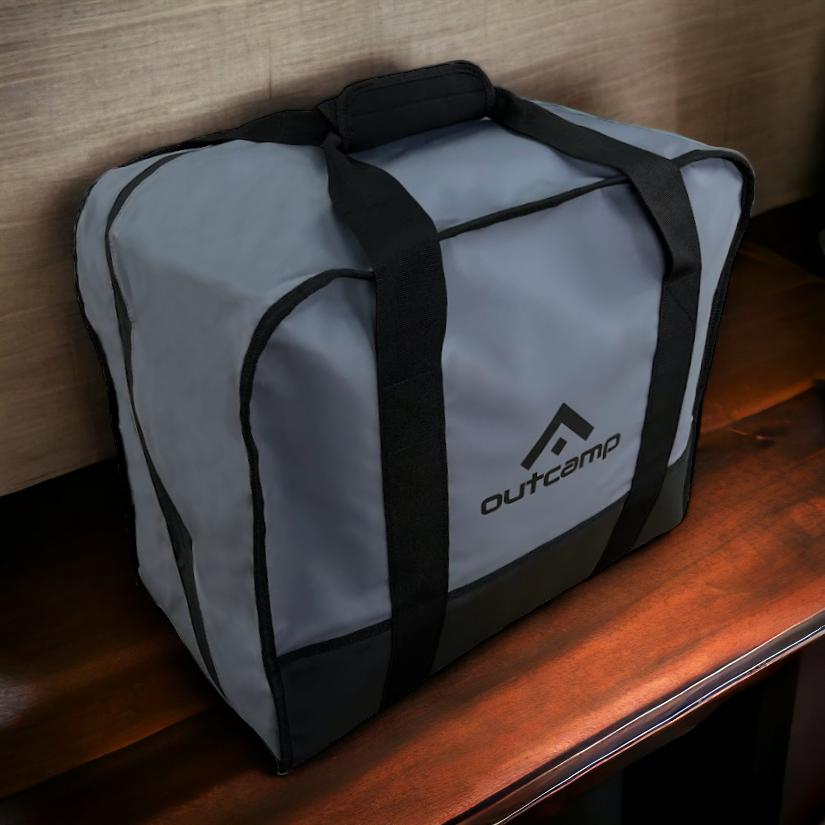
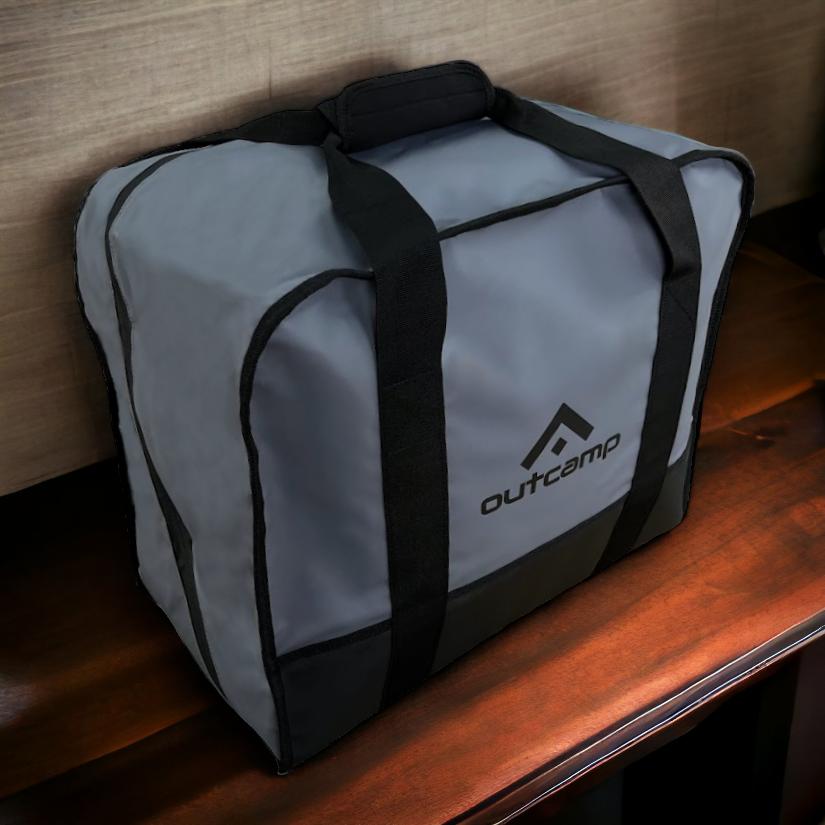
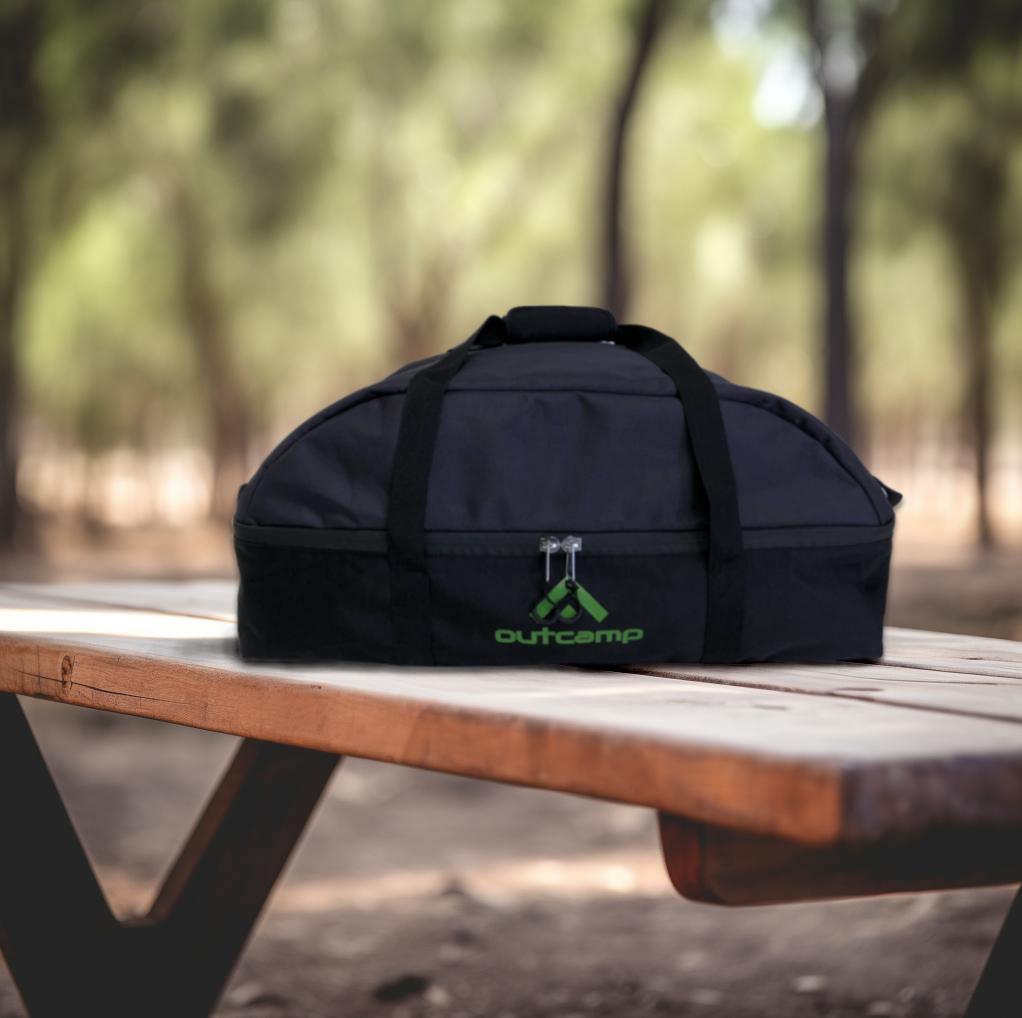
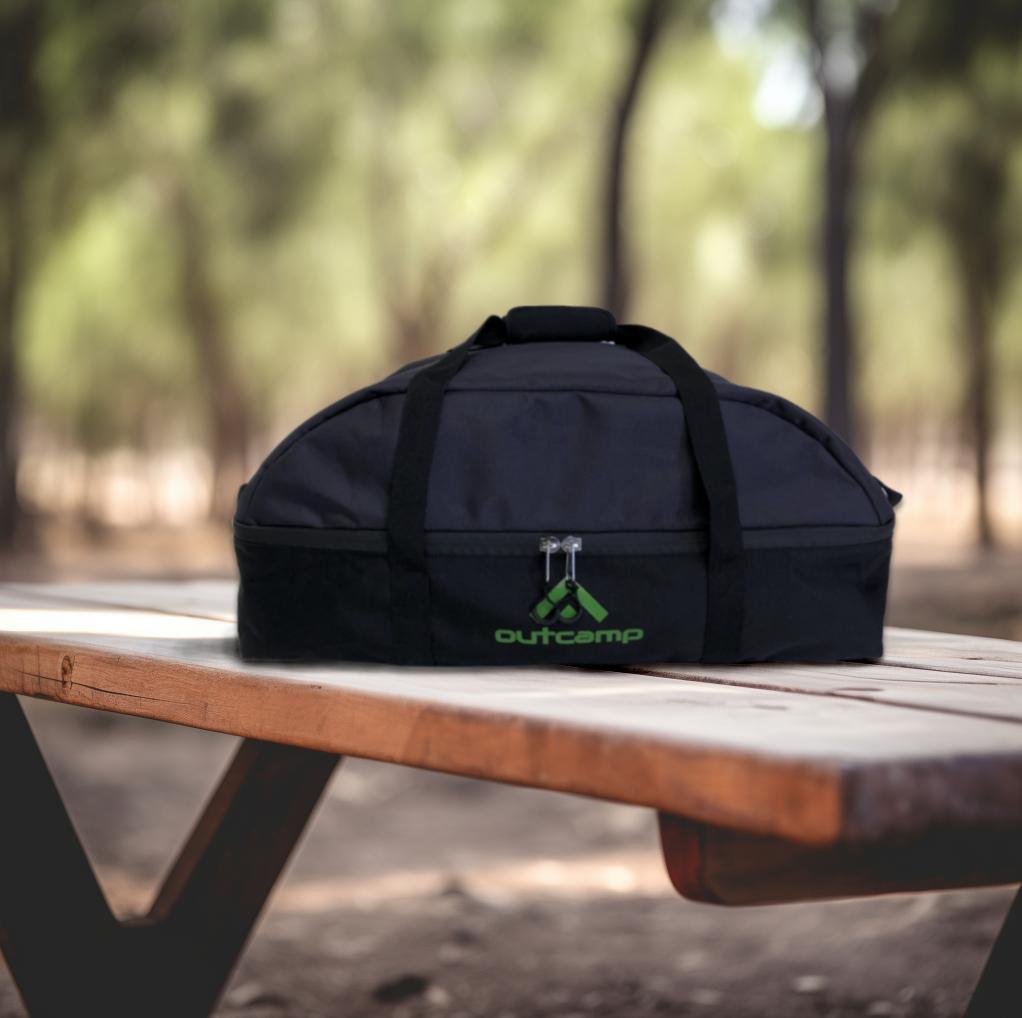
Quality coax cable — RG-58 or better, with quality connectors properly crimped or soldered rather than push-fit — is the final piece of a well-installed antenna system. Coax losses increase significantly at UHF frequencies compared to HF or VHF, so using the shortest run of quality cable that your installation allows, and avoiding tight bends or kinks, ensures you're getting the performance your antenna and radio are capable of. Outcamp's range of accessories, cable management solutions, and carry gear complements any well-built touring communications setup — whether you're staying connected via UHF radio, satellite communicator, or both.








Leave a comment (all fields required)