Caravan Oven Snag, Potato and Capsicum Bake: The Easy One-Tray Dinner
Pulling into camp after a long driving day, the last thing you want is a cooking project. You want dinner in the oven, your boots off, and twenty minutes of quiet before the food is ready. This is exactly what a caravan oven was made for, and yet most travellers leave the thing cold for the entire trip.
A one-tray sausage bake is the recipe that earns its keep. You drop everything into a roasting tray, slide it into your caravan's small gas oven, and walk away. By the time you have levelled the van and poured a cold drink, dinner is browning nicely and the kids are starting to circle the kitchen. It is honest Aussie comfort food made with snags, potatoes, capsicum, and a couple of pantry staples. No fancy ingredients, no juggling burners, no scrubbed pots. If your caravan has an oven and you are not using it, you are working harder than you need to on holiday.
Why the caravan oven is the most underrated tool in your kitchen
Most full-size touring caravans built in the last decade come fitted with a small three- or four-burner cooktop sitting above a compact gas oven and grill. It is a proper bit of kit, but it gets ignored in favour of the camp BBQ or the hotplate over the fire. People assume the oven is too small, too fiddly, or too gas-hungry. None of that is really true.
The caravan oven shines for one-tray meals — bakes, roasts, simple casseroles — and it lets you set and forget. You are not standing over a hotplate flipping sausages while sand blows into your dinner. You are sitting outside, having a chat, while the oven does the work. For travelling families and grey nomads who have spent a full day towing across the Nullarbor or up the Bruce Highway, that hands-off cooking is genuinely valuable.
Free up your stovetop for sides
When you slide a tray into the oven, the cooktop above is freed up for the things that benefit from direct heat. You can boil a billy for a cuppa, simmer a pot of peas, or warm a tin of baked beans without rearranging the kitchen. On a small caravan benchtop, that real estate matters.
A hotplate-only cook always involves shuffling. The snags get pushed to the cool side while the eggs go on, then the eggs come off so the bread can toast. The oven removes that whole problem. Once the tray is in, the burners are yours for whatever else needs doing.
It also means you are not stuck in the van for the whole cook. You can step outside, wipe down the awning, get the camp chairs out, or fix the kids' bikes after a corrugated road has rattled the bolts loose. You check the oven once or twice through the door and otherwise leave it alone.
Even cooking with no babysitting
Sausages cooked on a hotplate or BBQ tend to come out unevenly — beautifully charred on one side and pale on the other if you forget to turn them. Cook them in the oven and they brown all the way around, with the fat rendering down into the potatoes and capsicum below. The result is more consistent, especially for the bigger thick snags that struggle to cook through on a hot grill.
Caravan ovens are small, which is actually an advantage for one-tray meals. The cavity heats fast — usually within ten minutes from cold — and the close walls bounce heat around the food evenly. You do not need a huge kitchen oven to get a great roast result for two to four people.
The temperature can run a bit hot near the back, so most caravan cooks rotate the tray once during the cook. It is a thirty-second job. Other than that, the oven asks nothing of you while it does its thing.
Works on or off the grid (with caveats)
A caravan gas oven runs entirely off your LPG bottle, which means it works the same whether you are on a powered site at a holiday park or fully off-grid in the bush. There is no inverter draw, no need to turn the generator on, and no stress about your battery state of charge. For four-wheel drive owners towing into remote spots like Karijini, Cape York, or the Flinders, that gas independence is a real advantage.
The trade-off is gas use. A 30 to 45 minute bake will burn through a bit of LPG, and if you are running fridges, hot water, and the cooktop off the same bottle, plan to swap or refill more often. As a rough guide, a 9 kg bottle gets you a long time of casual cooking but not many big roast nights. If you are off-grid for weeks, factor an extra bottle into your kit. Most caravanners already carry two and switch over with a changeover regulator.
If your van does not have an oven — many pop-tops, hybrids, and camper trailers do without — there is an alternative method at the end of this recipe using your camp BBQ with the lid down. The result is essentially the same.
What you need: ingredients and gear that pack well
This is a fridge-friendly recipe, designed around things you can buy at a regional IGA or Woolies on a travel day. There are no esoteric herbs, no specialty cuts, and no equipment beyond a roasting tray that fits your caravan oven. If you are heading off-grid, everything except the snags will keep for a week or more.
Quantities below feed two adults generously, or two adults and two kids with a side of bread or salad. Scale up by adding a second tray if you have a bigger oven and a hungry crew.
The ingredients (a shopping list that survives the road)
Pick up six to eight thick beef or lamb snags from the butcher or supermarket meat aisle. Thick is the key word — thin breakfast sausages will dry out in the oven. The good butcher snags survive a couple of days in the Engel and cook beautifully; if you are buying a few days out from camp, vacuum-sealed sausages last longer.
For the vegetables, you want roughly 700 to 800 grams of waxy potatoes — Dutch creams, kipflers, or a small bag of baby potatoes. Cut anything bigger than a golf ball in half. Add two capsicums (one red, one yellow if you can grab them, but any colour works), one large red onion cut into wedges, and a bulb of garlic broken into unpeeled cloves. The garlic roasts inside its skin and becomes a sweet, spreadable bonus that you can squeeze onto bread.
Pantry items: olive oil, salt and pepper, smoked paprika, dried oregano, and a tablespoon of Dijon or wholegrain mustard. If you have a half-tin of tomatoes or a splash of cider vinegar in the fridge, both lift the bake nicely. None of this is precious; if you are missing the paprika, plain pepper and salt does the job.
The gear: tray, knife, oven mitts
You need one shallow roasting tray, ideally enamel or non-stick, sized to fit your caravan oven. Most caravan ovens take a tray around 30 by 22 centimetres comfortably. If you do not own one, the Big W camping homewares aisle has cheap enamel trays that travel well and stack with your other kitchen kit.
A sharp knife is more important than people give credit for in a cramped caravan kitchen. A small chef's knife and a flexible plastic chopping board take up almost no room and make prep faster. Throw in a pair of oven mitts or a thick tea towel — caravan oven trays come out very hot, and you do not want to be juggling 200 degrees Celsius of metal in a tight space.
Optional but useful: a meat thermometer if you like to be precise (snags are done at 72 degrees Celsius internal), and a spatula or pair of tongs for turning the snags halfway through.
Substitutions for whatever your fridge has left
The beauty of a tray bake is that it forgives whatever you have on hand. Out of capsicum? Use zucchini, pumpkin chunks, or carrot batons. Run out of potatoes? Sweet potato cubes work brilliantly and cook in roughly the same time. Got a couple of tired mushrooms in the bottom of the crisper? Throw them in for the last fifteen minutes so they do not turn to leather.
Vegetarian travellers can swap the snags for veggie sausages, halloumi blocks, or a tin of chickpeas drained and tossed through the vegetables before they go into the oven. The cook time stays roughly the same. A sprinkle of feta over the top in the last five minutes turns the whole thing Mediterranean.
If you have leftover cooked rice or pasta, a portion warmed underneath the bake catches all the juices and turns into a near-perfect side. This is the kind of recipe that empties the fridge before a transfer day, which is a quiet win when you are trying to keep the Engel running efficiently.
Step-by-step: building the bake
The whole thing comes together in about twenty minutes of prep, then forty in the oven. From walking into the van to plating up, count on around an hour. If you start the oven heating as soon as you arrive at camp and do prep while it warms, you can shave that down further.
Do not bother with a recipe card sticky-taped to the splashback. The method is loose by design. Once you have made it twice, you will be doing it from memory and adjusting to whatever is in the fridge.
Prep the vegetables and snags
Light the oven and set it to 200 degrees Celsius (around 400 Fahrenheit if your dial is in old units — many caravan ovens are). While it warms, halve your potatoes if they are bigger than a golf ball, slice the capsicum into thick strips, and cut the onion into wedges. Break the garlic bulb into individual cloves and leave them in their skins.
Pile everything into your roasting tray. Drizzle generously with olive oil — about three tablespoons — then sprinkle over a teaspoon each of smoked paprika, dried oregano, salt, and a few good twists of pepper. Use clean hands or a wooden spoon to toss the vegetables until everything is coated. The oil and spices want to be on every piece, not pooling at the bottom.
Lay the snags directly on top of the vegetables, spacing them out so they have room to brown. Brush the snags with a thin smear of mustard if you are using it. The mustard caramelises in the oven and gives the snags a sweet, tangy crust that pairs beautifully with the vegetables underneath.
Layer, season, and slide into the oven
Slide the tray onto the middle rack of your caravan oven and shut the door. Set a timer for 25 minutes. There is nothing else to do at this point. Pour a beverage of your choice, get the camp chairs out, and check on the dog.
After 25 minutes, open the oven and have a look. The snags should be coloured on top and the potatoes should be starting to crisp at the edges. Use tongs to turn each snag over so the underside browns, and give the tray a quick rotation back-to-front to even out any hot spots. If the bottom of the tray is dry, splash in a quarter cup of water or stock to keep things moist.
Slide the tray back in and set the timer for another 10 minutes. Resist the urge to open the door any more than necessary — every time you do, the oven temperature drops and the cook stretches out. Trust the timer.
Crank the heat for the last 10 minutes
For the final stretch, push the oven up to 220 degrees Celsius and let the tray sit for another five to eight minutes. This is what gives you the proper roast finish — crackling potato edges, blistered capsicum skins, and a deep brown on the snags. If your oven has a separate grill function, you can flick that on for the last two minutes to push the colour even further. Watch it closely; caravan grills are aggressive.
Pull the tray out and rest it on a wooden board or trivet for two or three minutes. The snags will firm up slightly and the juices will redistribute through the vegetables. This rest is the difference between a good bake and a great one. Cutting in too early dries out the sausages.
While it rests, slice up some bread, grab a bottle of barbecue sauce or chutney from the cupboard, and call everyone to the table. Inside the van or out at the camp table, this dish travels straight from tray to plate without ceremony.
Serving ideas, leftovers, and travel tips
This is a one-tray meal, which means it is also a near one-dish wash up. There is the tray, the knife, the chopping board, and your dinner plates. For a recipe that feeds a family and impresses any visitors who happen to wander past, that is a fair return on effort.
The bake works for almost any setting, from a free camp on the side of the Stuart Highway to a powered site at a coastal holiday park. It is unfussy enough to throw together with kids underfoot and good enough to serve to fellow travellers who have stopped by for a beer and ended up staying for dinner.
How to serve it (and what to serve with it)
The simplest serve is straight out of the tray, with crusty bread to mop up the juices and a dollop of mustard or your favourite sauce on the side. A handful of rocket or baby spinach scattered over the top adds freshness and uses up the last of your salad bag before it wilts in the fridge.
If you have the energy for a side, a quick coleslaw made from a bag of pre-shredded slaw mix, a spoon of mayo, and a squeeze of lemon takes about three minutes and turns the meal into a proper Sunday-roast feeling. Tinned baked beans warmed in a small pot on the stovetop are another classic and very Australian pairing with snags.
For drinks, a cold beer or a glass of something red from the cellar (or the bottom of the wine bag in the back of the 4x4) finishes things off. Nothing about this dish demands to be paired with anything fancy.
Leftover hacks for tomorrow's lunch
Cooked snags and roasted vegetables keep well in an airtight container in the caravan fridge or Engel for two to three days. They are some of the best leftovers you will eat on the road.
Slice the leftover snags lengthways and pile them into wraps with the roasted vegetables, a smear of hummus, and some fresh tomato. That is your lunch the next day, sorted in five minutes, perfect for a roadside stop or a lunch break at a lookout. Cold roasted potatoes also fry up beautifully with eggs the following morning if you fancy a hash-style breakfast.
If you have a lot of vegetables left over, blitz them with stock and a splash of cream in a small pot and you have a roasted vegetable soup for a chilly evening. Travelling outside summer in the cooler months, this is a genuinely useful trick.
When you don't have a caravan oven (BBQ and stovetop alternatives)
If your camper trailer or pop-top does not have an oven, the same recipe works in a covered camp BBQ. Set the BBQ up for indirect cooking — burners off in the middle, on around the edges, or coals piled to the sides — and place the tray over the cool zone with the lid down. Cook at roughly the same temperature for the same time. The lid traps heat and the BBQ behaves like an oven.
A second alternative is a heavy lidded pot or camp Dutch oven on the stovetop, but be honest — that is a different recipe and a different dish. The tray bake method is what makes this one work.
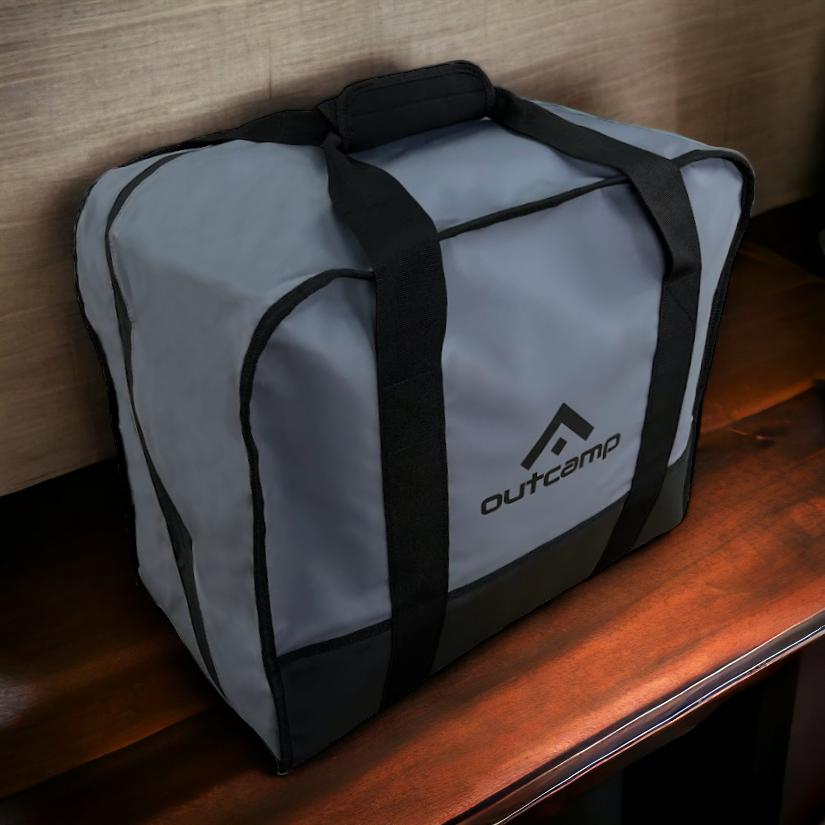
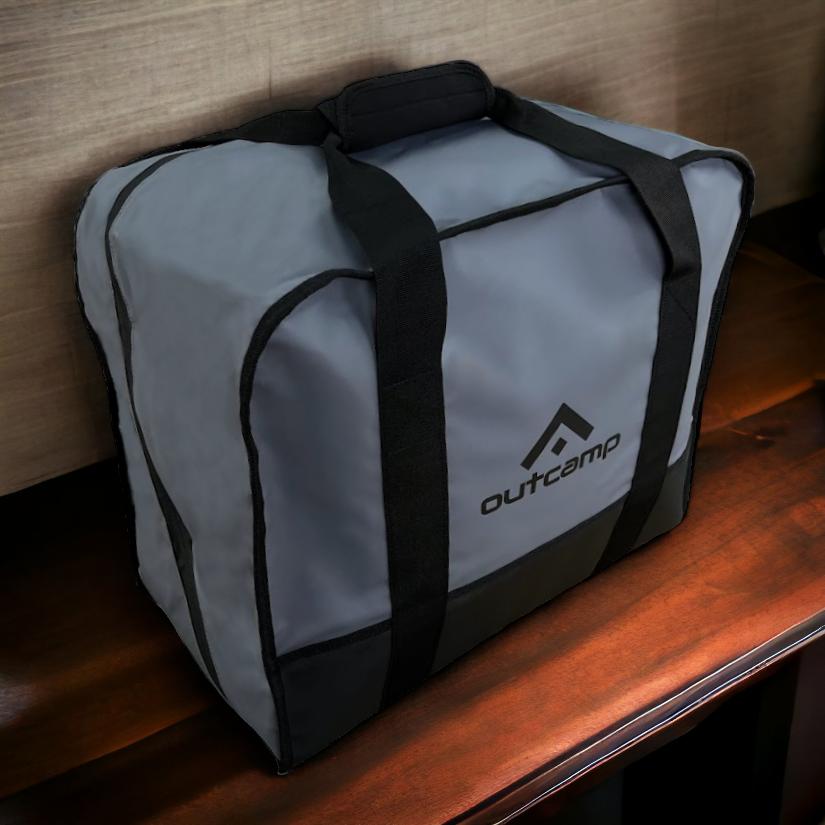
For four-wheel drive owners doing remote touring without a kitchen at all, this recipe also adapts to a Weber Baby Q or similar lidded camp BBQ over a couple of charcoal briquettes or low gas. You lose a little of the oven-evenness but gain a smoky note that is honestly not a bad swap. With a quality carry bag from Outcamp keeping your Baby Q packed and ready in the canopy, dinner can be on its way to plated within twenty minutes of pulling up at camp.
Whichever way you cook it, the principle is the same: throw everything in, walk away, and let the heat do the work. That is the kind of cooking that makes a trip relaxing instead of a chore.
A simple recipe that earns its keep
Recipes do not need to be complicated to be great, especially when you are travelling. The best camp and caravan meals are the ones you can throw together when you are tired, cook with one eye on the kids, and serve with a smile to whoever happens to be at your campsite that evening. This caravan oven snag and vegetable tray bake ticks every one of those boxes.
Once you have made it once, you will start using your caravan oven for everything: roast chicken thighs, baked fish, breakfast frittatas, even a quick pizza on a hot Sunday. The oven becomes part of your cooking arsenal alongside the BBQ, the camp stove, and the hotplate, rather than dead weight you tow around the country. For travelling Australians who want hot, satisfying food at the end of a long driving day without standing over a fire, it is one of the most useful tools in the van.
If you are kitting out your caravan or 4x4 setup, take a look through the Outcamp range — from carry bags for portable BBQs through to Starlink mounts so you can stream the footy while dinner roasts away. The right gear makes the holiday simpler, and so does a recipe like this one.